Insulation Contractor in St. George, UT
Our home base and Washington County's population center — hot-desert IECC Zone 3B insulation built around attic heat gain, cooling bills, and the housing boom's uneven insulation quality.
St. George is our home base, and it's the anchor of Washington County's hot-desert insulation market. At roughly 2,860 feet, St. George sits squarely in IECC Climate Zone 3B — the same broad climate family as Phoenix, though slightly milder with real short winter cold snaps. Summer highs regularly exceed 100–105°F, and an under-sealed attic in a St. George home can hit 130–150°F on a July afternoon, radiating heat straight down into the living space below and forcing the AC to run nonstop from Memorial Day through September.
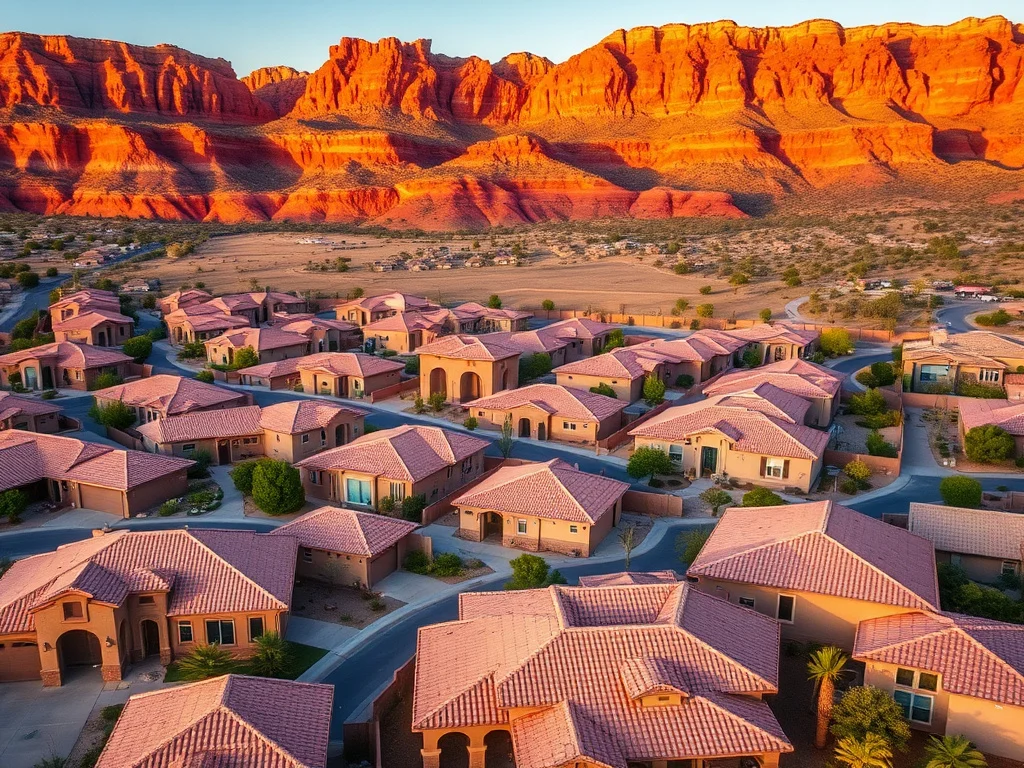
St. George's housing stock spans decades of rapid growth — established neighborhoods like Bloomington and Dixie Downs built during the 1980s-2000s boom, newer subdivisions off Little Valley and Sunset, and custom homes scattered throughout. That range means insulation quality varies enormously street to street, and a lot of homes here are running on original, settled, or simply under-specified insulation that was never built to a real R-38/R-49 target.
Utility & rebate note for St. George
Rocky Mountain Power (wattsmart Home) or Dixie Power, depending on address
Portions of St. George are served by Rocky Mountain Power (eligible for the wattsmart insulation rebate) and portions by Dixie Power or St. George City's own municipal service — we verify which one serves your specific address before promising a rebate applies.
Neighborhoods & areas we serve in St. George
Why St. George attics fail
The core problem in St. George is radiant heat gain through the roof deck. Southern Utah's intense summer sun heats an asphalt shingle roof to well over 150°F at the surface, and that heat conducts through the roof sheathing into the attic space below. In a properly insulated and air-sealed attic, most of that heat stays above the insulation layer. In an under-insulated or leaky attic — common in older Bloomington and Dixie Downs construction — that heat pours straight through into the ceiling below, working directly against your air conditioning.
Add in decades of settled fiberglass batts, gaps around can lights and top plates that were never sealed during original construction, and July–September monsoon-driven dust that can infiltrate through poorly sealed soffit and ridge vents, and it's clear why so many St. George homes run higher cooling bills than they should.
- Radiant heat gain through an intensely sun-loaded roof deck
- Settled, decades-old fiberglass in boom-era subdivisions
- Unsealed can lights, top plates, and attic hatches
- Monsoon-season dust infiltration through poorly sealed vents
What we typically recommend in St. George
Most St. George projects start with an attic assessment: current depth, condition, and air-leak inventory. For homes with dry, salvageable insulation that's simply thin, a blown-in top-up to the R-49 recommended target (after air sealing) is usually the most cost-effective fix. For homes with degraded, contaminated, or monsoon-water-damaged insulation, we recommend removal and fresh re-insulation. Crawl space insulation is a frequently overlooked add-on in older St. George neighborhoods with vented, uninsulated floor systems.
Garage ceiling insulation is also a common request here — St. George garages routinely exceed 110–120°F in summer, and if a bedroom or laundry room shares a wall or ceiling with the garage, that heat radiates directly into living space.
St. George's growth and what it means for insulation quality
St. George continues to be one of the fastest-growing small metro areas in the country, and that growth has produced a genuinely mixed bag of construction quality. Some newer subdivisions are built tighter and better-insulated than the housing stock from the 1990s-2000s boom; others, built quickly to meet demand, cut corners on air sealing and insulation depth that don't show up until a homeowner's first full summer in the house. We see this pattern often enough that we never assume a newer St. George home is automatically well-insulated — every assessment starts from a real inspection, not an assumption based on the home's age.
St. George insulation questions, answered
St. George's intense summer sun heats the roof deck well past 150°F at the surface, and in an under-insulated or leaky attic, that heat conducts straight through into the ceiling below — directly fighting your air conditioning and driving up your Rocky Mountain Power or Dixie Power bill. It's one of the biggest, most fixable sources of summer discomfort in the St. George housing stock.
An under-sealed St. George attic commonly hits 130–150°F or more on a July or August afternoon. Air sealing and bringing insulation up to the recommended R-49 target significantly reduces how much of that heat reaches your living space.
St. George sits in IECC Climate Zone 3B, where code minimum is R-38 for attic insulation, with R-49 commonly recommended for real-world performance against desert heat gain. Many existing St. George homes, especially those built during the 1990s-2000s boom, fall well short of that.
Yes — properly air-sealed attic insulation also helps block monsoon-driven dust infiltration through soffit and ridge vents, a genuine regional issue on top of the temperature problem.
Popular services in St. George
Ready for a free St. George insulation estimate?
Tell us about your home and we'll put together a clear, no-pressure quote — plus tell you what current Rocky Mountain Power or Dixie Power rebate options may apply.