Crawl Space Insulation & Encapsulation in St. George & Cedar City, UT
Insulation, vapor barriers, and sealing for the vented crawl spaces that quietly leak energy through uninsulated floors and rim joists across Southern Utah — a service almost no competitor site emphasizes.
Many Southern Utah homes — older St. George, Washington, and Hurricane construction alongside Cedar City homes built for a genuinely cold-ground climate — have vented crawl spaces losing energy through uninsulated floors and rim joists. This is one of the most consistently overlooked problems in the region: homeowners fix the attic and stop there, while a cold, unsealed crawl space keeps chilling the floor above it in Cedar City or letting conditioned air escape into hot, dusty ground-level air in the St. George corridor.
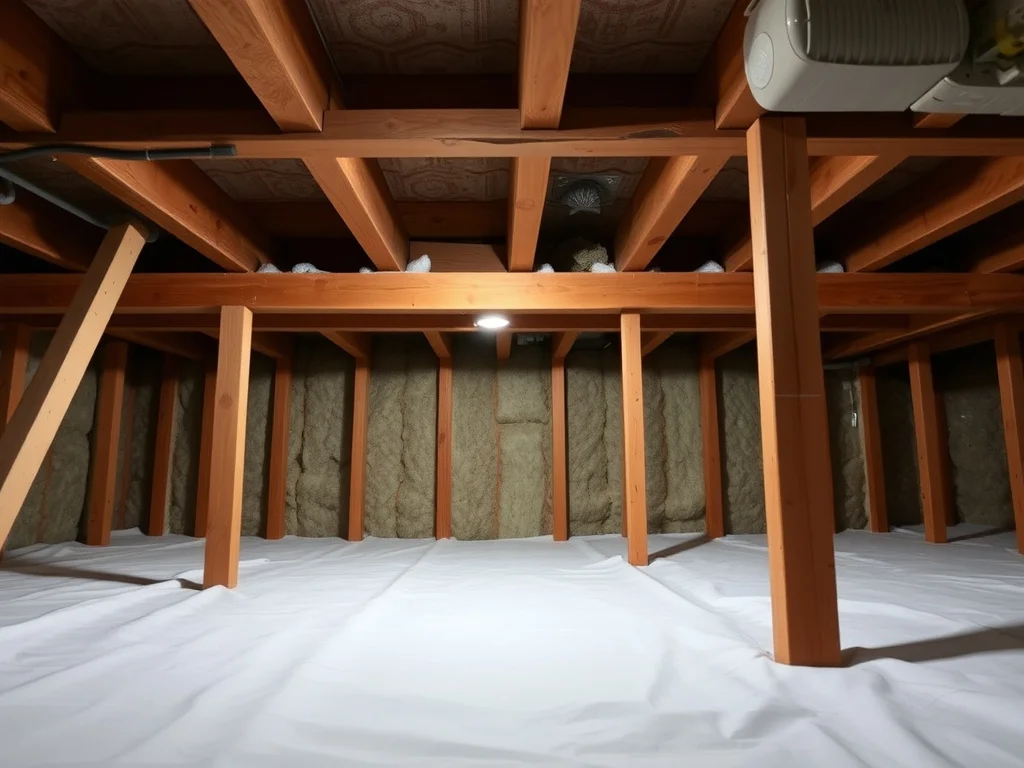
Crawl space insulation and encapsulation covers floor insulation between joists, rim joist sealing, a proper ground vapor barrier, and — where it makes sense — full encapsulation to control moisture and keep pests out. It's a genuinely needed service region-wide, not just a Cedar City cold-floor fix.
Why homeowners choose it
- Stops cold floors in Cedar City and Enoch homes through winter
- Reduces energy loss through uninsulated floors and rim joists year-round
- A proper vapor barrier controls ground moisture that invites pests and mold
- Rim joist sealing closes one of the most commonly missed air-leak points in any home
- Protects underfloor plumbing from Cedar City freeze risk
- Improves indoor air quality by sealing off ground-level dust and moisture infiltration
Floor insulation, rim joists, and vapor barriers
A properly insulated crawl space starts with the floor system: batt or closed-cell spray foam insulation installed between the floor joists, sized to the R-30 (or better, in Cedar City) target for floors over unconditioned space. Rim joists — where the floor framing meets the foundation — are one of the most commonly missed air-leak points in any home and get sealed as part of every crawl space job, not as an afterthought.
A continuous ground vapor barrier is the other essential piece. Bare or thin, torn poly sheeting over crawl space soil lets ground moisture rise into the space, which can undermine even well-installed insulation over time and is a genuine contributor to musty odors and pest activity in older Southern Utah homes.
How crawl space insulation & encapsulation works, start to finish
Free assessment
We inspect your home or building, measure existing R-value, and confirm your climate zone and current rebate options.
Custom plan & itemized quote
A clear, honest scope — the right material in each area, built to your climate's actual R-value target.
Clean, professional install
Our crews prep, air seal, and install to your target R-value, on schedule and with the site protected.
Documentation & rebate help
We verify the finished work, document before-and-after depth, and help file current rebate paperwork.

Crawl space insulation carries the highest CPC of any keyword in our regional research — a strong signal that Southern Utah homeowners are actively searching for this fix and few competitors are offering it with any real depth. We treat it as a full service, not an afterthought to attic work.
Why this matters differently in each climate
In St. George, Washington, Hurricane, Santa Clara, and Ivins, an uninsulated crawl space lets hot, dusty ground-level air — worsened by July–September monsoon humidity spikes — infiltrate into the home's floor system, undermining the cooling you're paying for upstairs. In Cedar City and Enoch, the same uninsulated crawl space is a direct path for winter cold to chill the floor above and put underfloor plumbing at real freeze risk during a hard cold snap.
Full encapsulation vs. a standard crawl space upgrade
Not every crawl space needs full encapsulation. If ground moisture is minimal and the space is reasonably dry, floor insulation, rim joist sealing, and a proper ground vapor barrier are often enough. Full encapsulation — sealing vents, adding a continuous wall-to-wall vapor barrier up the foundation walls, and in some cases conditioning the space directly — is the right call when there's active moisture intrusion, recurring pest problems, or a homeowner wants the highest level of control. We inspect first and recommend the level of work your specific crawl space actually needs.
Ideal for
- Older St. George, Washington, and Hurricane homes with vented, uninsulated crawl spaces
- Cedar City and Enoch homes with persistently cold floors
- Homes with visible ground moisture, musty odors, or pest activity beneath the floor
- Anyone who has already upgraded attic insulation but still has an under-treated envelope
- New buyers wanting a full envelope assessment before moving in
What affects the cost
Crawl Space Insulation & Encapsulation questions, answered
Often, yes. Attic insulation and crawl space insulation solve two different problems, and a well-insulated attic doesn't fix a cold floor in Cedar City or energy loss through an uninsulated floor system in the St. George corridor. Most complete home-efficiency projects address both.
Encapsulation means sealing vents and adding a continuous vapor barrier (sometimes up the foundation walls) to control ground moisture. It's not required for every home — homes with dry crawl spaces often just need floor insulation and a standard ground vapor barrier — but it's worth it where moisture, musty odors, or pest activity are already a problem.
Yes. Untreated ground moisture beneath a Southern Utah home can contribute to musty odors, pest activity, and in some cases mold growth on floor framing. A proper vapor barrier addresses the root cause rather than just the comfort symptom.
This depends on the structure — see our dedicated garage and shop insulation service for full detail. Crawl space and garage/shop projects are priced separately since they involve different materials and access considerations.
Related services
Ready for a free crawl space insulation & encapsulation estimate?
Tell us about your home and we'll put together a clear, no-pressure quote — plus tell you what current Rocky Mountain Power or Dixie Power rebate options may apply.