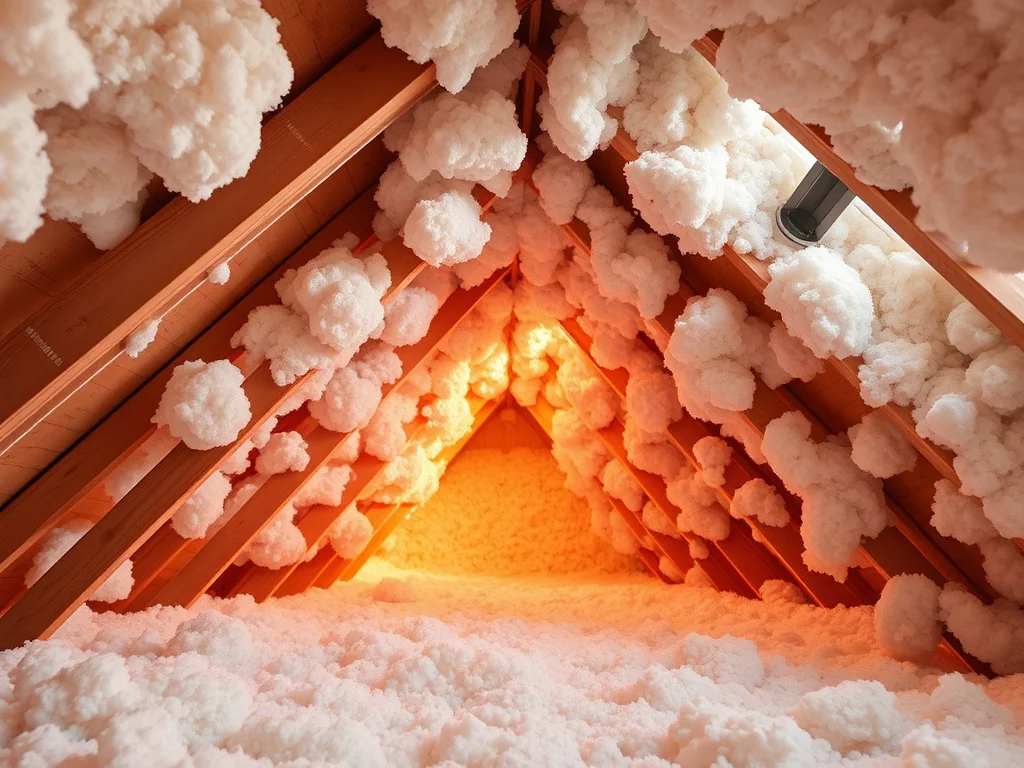
Attic Insulation Installation & Upgrades in St. George & Cedar City, UT
The flagship fix for a hot or cold attic — inspection, air sealing, and R-38/R-49+ upgrades matched to IECC Zone 3B desert heat or Cedar City's colder, higher-elevation climate.
Your attic is the single most important place to insulate in a Southern Utah home — for two very different reasons depending on which side of our service area you're in. In St. George, Washington City, Hurricane, Santa Clara, and Ivins, an under-insulated attic lets desert heat pour down into your living space all summer, driving cooling bills up from Memorial Day through September. In Cedar City and Enoch, an under-insulated attic lets your furnace's heat escape straight through the roof all winter, in a climate that sees real snow and genuinely cold nights.
We handle attics end to end across the region: assessing what's there, air sealing the leaks, adding or replacing insulation, and getting the whole system up to a target that actually matches the climate zone the home sits in — not a generic statewide number.
Why homeowners choose it
- Targets the largest source of energy loss in most homes, in either direction
- Fast payback through lower cooling bills in the desert corridor or heating bills in Cedar City
- Reduces monsoon-season dust infiltration through better-sealed soffit and ridge vents
- Evens out hot and cold rooms across the house
- Documented before-and-after depth for Rocky Mountain Power rebate paperwork
- Improves comfort immediately, whichever season is bearing down
Top-up vs. removal-and-replace
Not every attic needs a full tear-out. If your existing insulation is dry and in good shape, the most cost-effective path is often a top-up — air sealing first, then blowing in additional loose-fill to reach your target R-value. But if the old insulation is wind- or monsoon-water-damaged, rodent-contaminated, or so unevenly distributed that it can't be salvaged, removal-and-replace is the right call. We inspect first and recommend the honest path, never a tear-out you don't need.
How attic insulation works, start to finish
Free assessment
We inspect your home or building, measure existing R-value, and confirm your climate zone and current rebate options.
Custom plan & itemized quote
A clear, honest scope — the right material in each area, built to your climate's actual R-value target.
Clean, professional install
Our crews prep, air seal, and install to your target R-value, on schedule and with the site protected.
Documentation & rebate help
We verify the finished work, document before-and-after depth, and help file current rebate paperwork.

St. George-area attics regularly hit 130–150°F+ in July and August, driving cooling costs; Cedar City sees real winter cold and needs the opposite priority — heat retention. An attic built to the right R-38/R-49+ target for its actual climate zone is the foundation of both.
Building to the right target for each climate zone
St. George, Washington, Hurricane, Santa Clara, and Ivins sit in IECC Climate Zone 3B at roughly 2,200–2,900 feet, which calls for R-38 minimum ceiling insulation, R-49 recommended for real-world performance against radiant desert heat gain. Cedar City and Enoch sit at roughly 5,846 feet in a genuinely colder, effectively Zone 5B-equivalent climate, where we typically build toward the higher end of that range or beyond, because the building's job there is holding heat in through a real winter, not just rejecting summer heat.
We calculate the additional depth needed to reach your target, install to a documented, even depth, and leave measurement markers in place so your finished R-value is verifiable — useful both for your own records and for rebate paperwork.
Ventilation, monsoon dust, and attic health
A great attic insulation job is about more than depth. We install soffit baffles so intake ventilation stays open, box out heat-producing fixtures where required, seal the attic hatch, and make sure the attic can breathe properly. In the St. George corridor, this ventilation work does double duty: it manages the intense radiant heat load in July and August, and it keeps July–September monsoon-driven wind and dust from infiltrating through poorly sealed soffit and ridge vents — a genuine regional issue most competitor sites never mention. In Cedar City, balanced ventilation prevents moisture buildup under the roof deck during snow-load winters.
Signs your Southern Utah attic needs attention now
A handful of warning signs show up again and again in Southern Utah attics that are overdue for work: an upstairs that never quite cools down even with the AC running hard in St. George or Hurricane, a Rocky Mountain Power bill that climbs every July and August without an obvious cause, visible dust accumulation inside the attic near soffit vents after a monsoon storm, or — in Cedar City — rooms that stay noticeably cold despite the furnace running and any sign of moisture or frost on the underside of the roof deck.
We also regularly find attics where the insulation depth simply isn't even — thick in the middle of the attic floor and thin or nonexistent near the eaves, where it matters most for both heat rejection and heat retention. A flashlight-and-tape-measure check from the attic hatch can give you a rough sense of where you stand, but a proper assessment measures depth at multiple points and checks for the air leaks a visual check alone will miss.
- Upstairs rooms that stay hot in St. George/Hurricane despite the AC running
- Rocky Mountain Power bills climbing every summer without an obvious cause
- Visible dust intrusion near soffit vents after monsoon storms
- Cedar City rooms that stay cold or drafty despite the furnace running
Ideal for
- Homes with thin, settled, or missing attic insulation
- Older St. George, Washington City, and Santa Clara houses below R-38
- Cedar City and Enoch homes needing a higher, cold-climate-appropriate target
- Anyone chasing lower Rocky Mountain Power or Dixie Power bills
- Attics needing removal of old, dust-contaminated, or monsoon-water-damaged insulation
What affects the cost
Attic Insulation questions, answered
St. George, Washington City, Hurricane, Santa Clara, and Ivins sit in IECC Climate Zone 3B, where code minimum is R-38 for attic insulation, with R-49 commonly recommended for real-world performance against desert heat gain. Many existing homes sit well below that.
Yes, meaningfully. Cedar City sits at a much higher elevation in a genuinely colder, four-season climate, and needs insulation built for heat retention — usually toward the higher end of the R-49 range or beyond — rather than the heat-rejection-first approach that works for the St. George corridor.
In the St. George corridor, properly air-sealed attic insulation reduces the radiant heat gain driving your AC to run harder all summer, which shows up directly in lower cooling costs. In Cedar City, the same work reduces winter heat loss, lowering heating costs instead.
Both, together. Insulation slows heat transfer but doesn't stop air movement — a common reason a St. George upstairs stays hot even after adding insulation. We always air seal the attic floor before or alongside adding new insulation so the R-value you're paying for actually performs.
Fiberglass and cellulose loose-fill can perform for decades, though settling and monsoon-driven dust infiltration can reduce real-world performance over time in the St. George corridor. A quick depth and condition check tells you whether a top-up or removal is the right move.
Related services
Ready for a free attic insulation estimate?
Tell us about your home and we'll put together a clear, no-pressure quote — plus tell you what current Rocky Mountain Power or Dixie Power rebate options may apply.