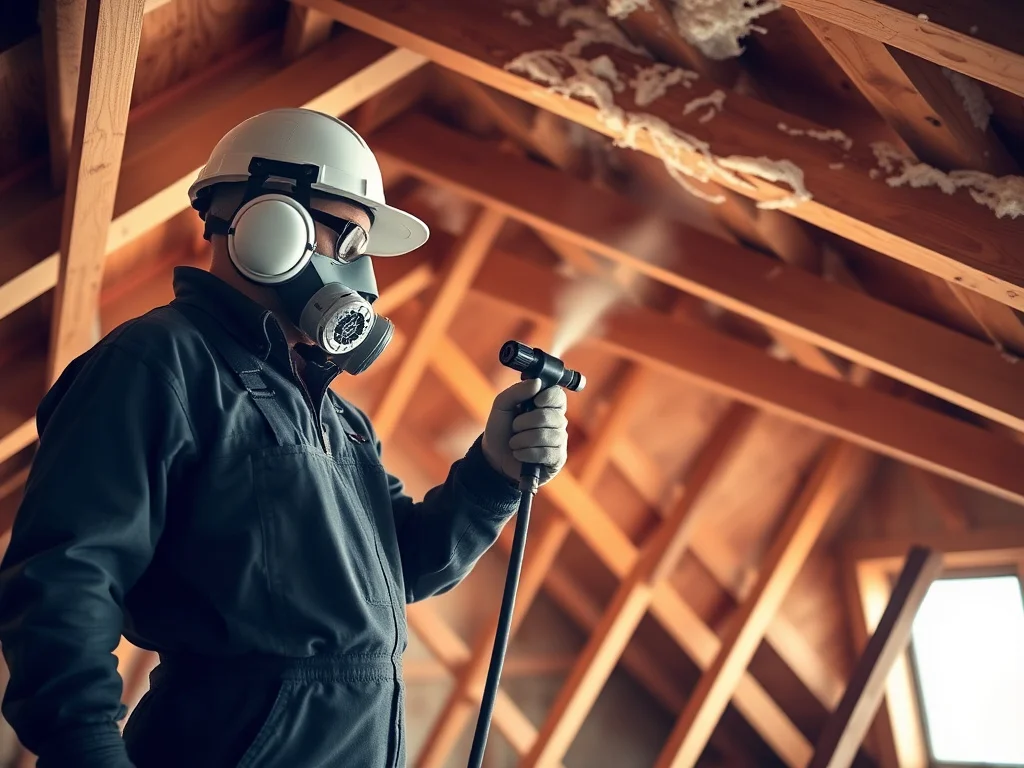
Spray Foam Insulation in St. George & Cedar City, UT
The highest R-value per inch and a built-in air seal in one step — the strongest defense against desert attic heat gain in Washington County and winter heat loss in Cedar City.
Spray foam is the highest-performing insulation available for a Southern Utah home, and it's one of the few products that genuinely earns its keep in both halves of our service area. Unlike batts or loose-fill that only slow heat movement, spray foam expands to fill every gap and crack, insulating and air-sealing in a single application. In St. George, Washington City, Hurricane, Santa Clara, and Ivins, that combination is what actually stops 130–150°F attic air from radiating down into living space through the summer. In Cedar City and Enoch, the same product does the opposite job just as well — sealing the envelope so winter heat stays inside instead of escaping through the roof deck.
We install both open-cell and closed-cell spray foam and match the right product to each part of the home. Southern Utah's mixed housing stock — 1980s-2000s boom-era Dixie-area subdivisions, custom red-rock homes around Ivins and Santa Clara, and a genuinely different, colder Cedar City and Enoch housing stock — needs a contractor who specifies foam by climate and application, not a one-size answer for the whole region.
Why homeowners choose it
- The highest R-value per inch of any common insulation material
- Air-seals and insulates in a single application — no separate sealing step
- Blocks radiant desert attic heat gain in the St. George corridor
- Resists moisture and won't sag or lose R-value over time in Cedar City's snow-load climate
- Strengthens rim joists and vaulted ceilings against both heat gain and heat loss
- The best option for hard-to-insulate spaces like garages, additions, and custom rooflines
Open-cell vs. closed-cell spray foam
The two spray foam types do different jobs. Open-cell foam is lighter and softer, expands more, and is a cost-effective choice for interior walls and ceilings where you want a strong air seal and good sound dampening — a solid fit for St. George-area additions and garage conversions. Closed-cell foam is denser, delivers a higher R-value per inch, adds real structural rigidity, and acts as a moisture barrier — which matters far more in Cedar City, where snow-melt and attic condensation are real risks, than in the dry St. George corridor, where Utah's low humidity makes closed-cell's moisture-barrier performance a smaller (though still real, monsoon-season) factor.
We don't push one product for every job or apply the same spec across both climates. We assess each area of your home — its exposure, its moisture profile, how much depth is available — and specify open-cell or closed-cell where each performs best.
How spray foam insulation works, start to finish
Free assessment
We inspect your home or building, measure existing R-value, and confirm your climate zone and current rebate options.
Custom plan & itemized quote
A clear, honest scope — the right material in each area, built to your climate's actual R-value target.
Clean, professional install
Our crews prep, air seal, and install to your target R-value, on schedule and with the site protected.
Documentation & rebate help
We verify the finished work, document before-and-after depth, and help file current rebate paperwork.

St. George-area attics can hit 130–150°F+ in July and August; Cedar City sees real winter cold and ~171 inches of snow a year. Spray foam's combined air seal and R-value is one of the few products that genuinely earns its cost in both halves of our Southern Utah service area — for opposite reasons.
Why spray foam fits both of Southern Utah's climates
St. George, Washington, Hurricane, Santa Clara, and Ivins sit in IECC Climate Zone 3B at roughly 2,200–2,900 feet — a hot-dry, cooling-dominated desert climate where summer highs regularly exceed 100–105°F and an under-sealed attic can hit 130–150°F. Because spray foam air-seals and insulates in one step, it stops radiant heat gain at the roof deck before it ever migrates into the attic floor and down into your living space, which is exactly why it delivers the biggest comfort gain on older, leakier Dixie-area homes.
Cedar City and Enoch sit at roughly 5,846 feet in a genuinely different, real four-season climate — cold winters, meaningful snow load, and milder summers. There, the same air seal keeps warm interior air from escaping into the attic and melting roof snow unevenly, while the added R-value keeps heating bills in check through a winter that has little in common with St. George's.
A clean, professional installation
Spray foam is a professional product that has to be installed correctly to perform and cure the way it's supposed to. Our crews mask and protect your home, verify substrate temperatures — critical during a St. George summer install when attic temperatures can complicate cure times, and equally critical during a Cedar City winter install when cold substrate slows cure — apply the foam at the correct thickness and ratio, and trim and clean up so the finished job is ready for drywall or the reinstallation of finishes.
The objection homeowners hear online — and the honest answer
If you've researched spray foam, you've probably run into online chatter about lenders or resale concerns tied to roofline spray foam applications, mostly stemming from cases where foam was installed incorrectly or used to mask an existing roof problem rather than as a planned insulation system. Properly installed, code-appropriate spray foam — the kind we install, documented and to spec — does not carry that reputation issue. The concern in those online threads is almost always about installation quality and disclosure, not the material itself.
We're upfront about this rather than dodging it: we'll tell you plainly which applications call for extra documentation for future resale or lender purposes, and we build that documentation into the project from day one so it's never a surprise down the road.
Ideal for
- Rim joists and additions in older St. George, Washington, and Hurricane homes
- Vaulted ceilings common in Ivins and Santa Clara custom construction
- Crawl spaces and roof decks where a moisture barrier matters, especially in Cedar City
- Homeowners chasing the maximum efficiency upgrade for the hottest or coldest room in the house
- Garage ceilings and walls that radiate desert heat into adjacent living space
What affects the cost
Spray Foam Insulation questions, answered
For crawl spaces, rim joists, garages, and vaulted ceilings, yes — spray foam's combined R-value and air seal earns its premium in both the St. George desert corridor and Cedar City's colder climate. For a standard attic floor, blown-in with proper air sealing often delivers comparable comfort for less, which is why we design each project by area rather than defaulting to foam everywhere.
Open-cell foam is lighter, expands more, and is a cost-effective air seal for interior walls and ceilings. Closed-cell foam is denser, has a higher R-value per inch, adds structural rigidity, and acts as a moisture barrier — making it especially valuable in Cedar City's snow-load climate and in any St. George-area crawl space.
Properly installed, code-appropriate spray foam does not cause roof damage. The lender and resale concerns you may have read about online almost always trace back to poor installation quality or foam used to mask an existing roof problem, not the material itself. We document every application so it's never a surprise at resale.
Yes. Once spray foam is properly installed and fully cured, it is inert and safe. Correct installation — right ratio, right thickness, right substrate temperature, and proper ventilation during application — is what ensures a clean cure, which is exactly why it should be done by trained professionals rather than a DIY kit.
Most single-area projects — a garage, a crawl space, a rim joist run — are completed in a single day. Whole-home or new-construction scopes take longer. We'll give you a clear timeline with your quote, accounting for St. George summer heat or Cedar City winter cold slowing cure time.
Related services
Ready for a free spray foam insulation estimate?
Tell us about your home and we'll put together a clear, no-pressure quote — plus tell you what current Rocky Mountain Power or Dixie Power rebate options may apply.