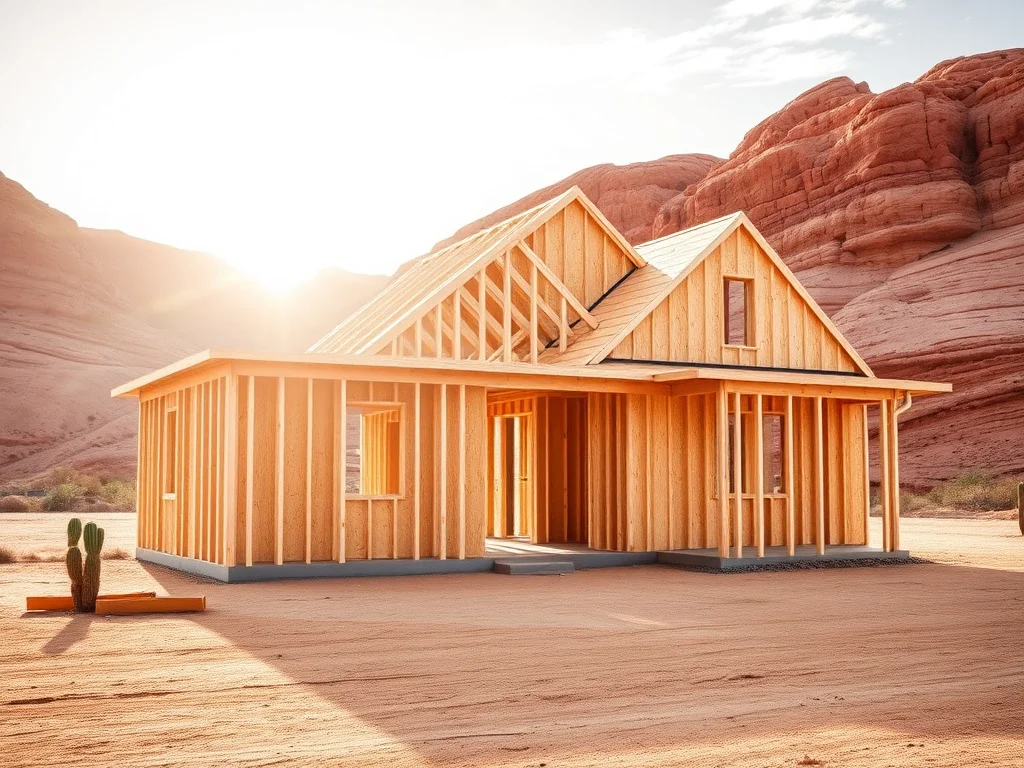
New Construction Insulation in St. George & Cedar City, UT
Code-compliant whole-home insulation packages for the ongoing St. George/Washington/Hurricane growth corridor and Cedar City/Enoch's expanding subdivisions, tailored per climate zone.
St. George, Washington City, and Hurricane are in an active growth corridor with master-planned communities and new subdivisions going up continuously, and Cedar City and Enoch are seeing their own real expansion in Iron County. New construction insulation is a builder- and contractor-facing service: code-compliant whole-home insulation packages specified correctly for whichever climate zone the project sits in, with straightforward coordination alongside framers and HVAC crews.
Getting new construction insulation right the first time — rather than retrofitting an under-specified home later — is meaningfully cheaper for everyone involved, and it's where the biggest difference between a Zone 3B desert-corridor spec and a Cedar City cold-climate spec actually shows up: wall assemblies, vapor detailing, and attic targets that a one-size builder spec often gets wrong.
Why homeowners choose it
- Code-compliant packages specified per IECC Zone 3B (St. George corridor) or the higher Cedar City/Enoch target
- Coordinated scheduling with framers, electricians, and HVAC crews
- Spray foam, blown-in, and batt options matched to each part of the build
- Avoids the retrofit cost of correcting an under-specified builder-grade spec later
- Reliable timelines for active subdivisions and custom builds alike
- A single insulation partner across multiple lots or phases for production builders
Two climate zones, two different specs
A new home in St. George, Washington City, Hurricane, Santa Clara, or Ivins is built to IECC Climate Zone 3B — R-38 attic minimum, R-49 recommended, wall and window specs geared toward keeping desert heat out and managing radiant heat gain through the roof. A new home in Cedar City or Enoch needs a meaningfully different assembly geared toward heat retention — higher attic R-values, careful vapor-barrier placement on the warm-in-winter side of wall assemblies, and attention to air sealing that a desert-corridor builder crew may not be used to detailing correctly.
We specify each new-construction project to the climate zone it's actually being built in, not a single statewide template — which matters enormously for builders working phases in both halves of our service area.
How new construction insulation works, start to finish
Free assessment
We inspect your home or building, measure existing R-value, and confirm your climate zone and current rebate options.
Custom plan & itemized quote
A clear, honest scope — the right material in each area, built to your climate's actual R-value target.
Clean, professional install
Our crews prep, air seal, and install to your target R-value, on schedule and with the site protected.
Documentation & rebate help
We verify the finished work, document before-and-after depth, and help file current rebate paperwork.

A new St. George-area home and a new Cedar City home need genuinely different insulation specs even though both are built to the same overall Utah Energy Code — we build each to its actual climate zone, not a single statewide default.
Coordinating with the build schedule
New construction insulation has to happen at exactly the right point in the build — after framing, electrical, and plumbing rough-in, before drywall. We work directly with builders' schedules and site supervisors to hit that window reliably across multiple lots or phases, communicating clearly about any framing details (blocking, can-light placement, HVAC chases) that affect the insulation scope.
- Scheduled to the framing-to-drywall window, lot by lot or phase by phase
- Direct coordination with site supervisors and other trades
- Spray foam, blown-in, and batt specified per area of the build
- Code-compliant documentation available for inspection
Custom builds vs. production subdivisions
Custom builds around Ivins and Santa Clara's red-rock lots often call for spray foam at vaulted ceilings and large window walls where framing depth is limited, alongside a full attic and wall package. Production subdivisions in the St. George/Washington/Hurricane corridor and the newer Cedar City/Enoch developments more often run efficient blown-in attic and batt wall packages at scale, with the same code-compliant rigor applied lot after lot.
Ideal for
- Production builders in the St. George, Washington City, and Hurricane growth corridor
- Custom home builders in Ivins and Santa Clara's red-rock lots
- Cedar City and Enoch subdivision developers needing genuine cold-climate specs
- General contractors managing multiple trades on a build schedule
- Homeowners building custom and wanting insulation specified beyond builder-grade minimums
What affects the cost
New Construction Insulation questions, answered
Yes — new construction insulation is a core part of our business, and we coordinate directly with builders' schedules across the St. George/Washington/Hurricane growth corridor and Cedar City/Enoch subdivisions, whether it's a single custom lot or a multi-phase production build.
Yes. Cedar City and Enoch need a genuinely cold-climate-appropriate spec — higher attic R-values and careful vapor-barrier detailing for heat retention — while the St. George corridor's Zone 3B spec is built primarily around rejecting summer heat gain. We specify each correctly rather than applying one template everywhere.
Yes — this is a regular part of our new construction work in the active St. George/Washington/Hurricane growth corridor. We coordinate directly with site supervisors to hit the framing-to-drywall window reliably across multiple units.
Yes, where required — we can document R-values and installation details to support the inspection process for your project.
Related services
Ready for a free new construction insulation estimate?
Tell us about your home and we'll put together a clear, no-pressure quote — plus tell you what current Rocky Mountain Power or Dixie Power rebate options may apply.