Blown-In Attic Insulation in St. George & Cedar City, UT
Loose-fill cellulose or fiberglass that fills attics evenly and fast — the most efficient way to hit the R-38–R-49 target this region's dual climate demands.
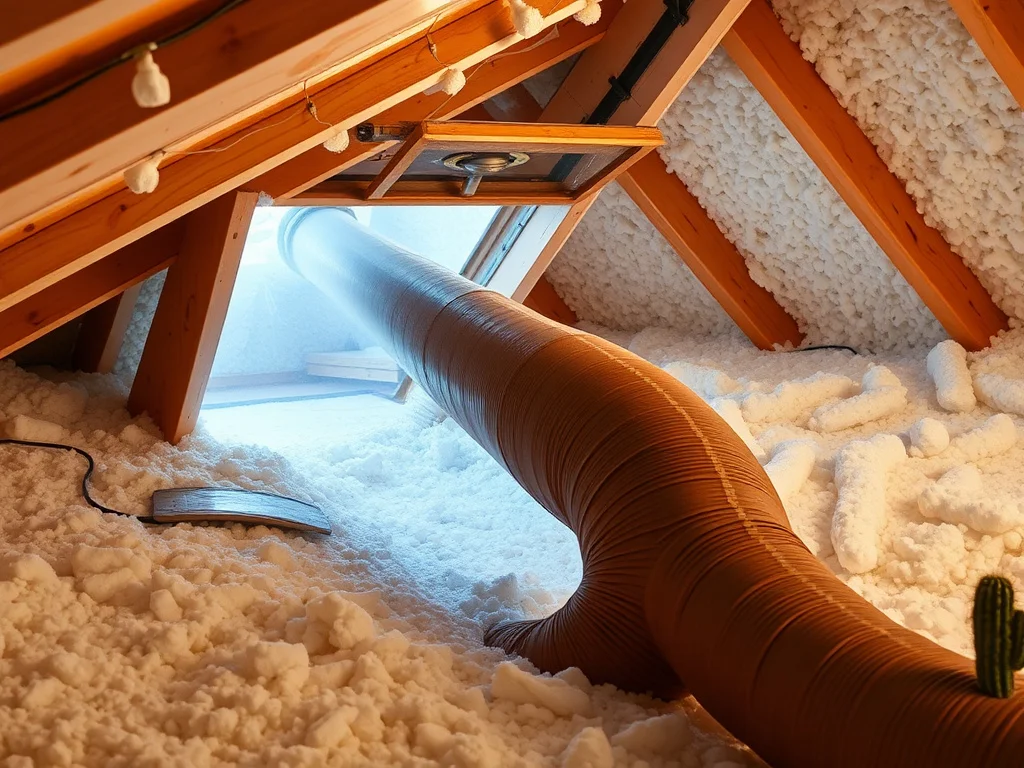
Blown-in insulation is one of the fastest, most cost-effective ways to raise a Southern Utah home's efficiency, whether the goal is keeping desert heat out of a St. George attic or keeping winter heat inside a Cedar City one. Loose-fill cellulose or fiberglass is blown through a hose to fill attics evenly, flowing around wires, pipes, and framing to create a gap-free blanket exactly where old, settled fiberglass in a 1990s or 2000s Dixie-area home has thinned out over the years.
Because it's installed as a loose fill, blown-in reaches into corners and irregular framing that rigid batts can't, which matters across the region's mixed-vintage housing stock — boom-era St. George and Washington City subdivisions, older Santa Clara homes, and the newer, code-driven subdivisions going up around Cedar City and Enoch.
Why homeowners choose it
- Even, gap-free coverage that flows around wiring and obstructions
- Fast installation with minimal disruption to the household
- Excellent for topping up under-insulated attics common in older Washington County homes
- Cellulose option is made largely from recycled content
- Strong value per R-value gained compared to spray foam
- Hits Cedar City's higher recommended attic depth without opening up walls
Cellulose vs. fiberglass loose-fill
Both cellulose and loose-fill fiberglass perform well; the right choice depends on the space and your priorities. Cellulose is made largely from recycled paper, is treated for fire resistance, packs densely, and is excellent at slowing air movement — a real advantage against Southern Utah's July–September monsoon winds and the wind-driven dust that finds its way into poorly sealed attics. Loose-fill fiberglass is lightweight, resists moisture, and settles less over time.
For deep Cedar City attic blankets we often recommend cellulose for its density and air-slowing qualities; for St. George-area attics where dust infiltration through soffit and ridge vents is the bigger concern, either material performs well once air sealing is done first.
How blown-in attic insulation works, start to finish
Free assessment
We inspect your home or building, measure existing R-value, and confirm your climate zone and current rebate options.
Custom plan & itemized quote
A clear, honest scope — the right material in each area, built to your climate's actual R-value target.
Clean, professional install
Our crews prep, air seal, and install to your target R-value, on schedule and with the site protected.
Documentation & rebate help
We verify the finished work, document before-and-after depth, and help file current rebate paperwork.

St. George-area attics need blown-in insulation to stop radiant summer heat from pouring down into living space; Cedar City attics need the same depth of material to hold winter heat in and resist snow-load-driven condensation. Same product, opposite job — we build to the target each climate actually needs.
Hitting the right attic target for each climate
St. George, Washington, Hurricane, Santa Clara, and Ivins sit in IECC Climate Zone 3B, where recommended attic insulation runs around R-38 minimum, R-49 recommended. Many homes built during the 1990s–2000s Dixie-area housing boom were built to older, lower standards and have lost real-world performance to settling over the years.
Cedar City and Enoch sit at higher elevation in a colder, effectively Zone 5B-equivalent climate, where we typically recommend building toward the higher end of the R-49 range or beyond — a meaningfully different target than the St. George corridor, because the priority there is winter heat retention, not just summer heat rejection.
Prep and air sealing come first
Blown-in insulation performs best over a properly prepared attic. Before we add insulation, we look for and seal the air leaks — around can lights, top plates, plumbing and wiring penetrations, and the attic hatch — because insulation slows heat but doesn't stop air movement. In the St. George corridor, this step also matters for keeping monsoon-season wind-driven dust out of the living space. We treat air sealing and blown-in insulation as a package so your new R-value actually delivers its full value.
What a blown-in installation day looks like
Most blown-in attic projects are a single-day job. Our crew sets up the blower machine outside — typically staged in the driveway with the hose run up to the attic access — protects the work path through your home, and completes the air-sealing pass first. Once the leaks are closed, we feed loose-fill material through the hose and distribute it evenly across the attic floor, checking depth against our target as we go rather than eyeballing it. We finish by leaving ruler markers at several points so the depth is easy to verify at a glance, either by you or by a rebate program's inspector.
Ideal for
- Attics that are under-insulated or below the R-38–R-49 target
- Older St. George, Washington City, and Santa Clara homes with settled insulation
- Homeowners wanting a high-ROI efficiency upgrade before summer or winter
- Cedar City and Enoch attics needing to reach a higher, cold-climate-appropriate depth
- Fast top-offs ahead of the monsoon season or the first Cedar City snow
What affects the cost
Blown-In Attic Insulation questions, answered
Blown-in almost always wins for attic floors because it flows around wiring, plumbing, and irregular framing to eliminate the gaps a rigid batt would leave — exactly what's needed to top off the thinned, settled fiberglass common in older Dixie-area attics.
Usually yes. If your existing batts are dry and in good condition, we can typically blow loose-fill on top to bring the attic up to today's R-38–R-49 target. If the old material is wet, rodent-damaged, or contaminated, we recommend removal first — see our insulation removal service.
St. George sits in IECC Climate Zone 3B, where code minimum is R-38 for attics with R-49 commonly recommended for real-world performance against desert heat gain. Many existing homes fall well short of that; a quick depth check tells you exactly where you stand.
Cedar City's higher elevation and genuine four-season climate call for building toward the higher end of the R-49 range, sometimes beyond — a meaningfully different target than the St. George corridor's Zone 3B minimum, because the priority here is holding heat in through a real winter.
Some settling is normal, and we account for it by installing to the correct initial depth so your attic still meets its target R-value after settling. We install to documented depths with ruler markers left in place, so performance is verifiable long after we leave.
Related services
Ready for a free blown-in attic insulation estimate?
Tell us about your home and we'll put together a clear, no-pressure quote — plus tell you what current Rocky Mountain Power or Dixie Power rebate options may apply.