How Much Does Attic Insulation Cost in St. George, UT? (2026 Price Guide)
"How much does attic insulation cost?" is the question we hear more than any other, and the honest answer is: it depends on your attic's size, current condition, target R-value, and which material makes sense for the job. That said, homeowners deserve real numbers to plan around, not just "call for a quote" — so here's a straightforward 2026 price guide for St. George and the wider Washington County corridor, with a note on how Cedar City pricing typically compares.
What drives attic insulation cost
- Attic square footage — the single biggest driver of material cost for any project.
- Current condition — a straightforward top-up costs less than a removal-and-replace project.
- Target R-value — reaching Zone 3B's R-49 recommendation from near-zero costs more than topping off an attic that's already at R-25.
- Material choice — blown-in, batt, and spray foam price very differently per square foot.
- Access and complexity — low-clearance attics, multiple roof planes, and extensive can-light boxing all add labor.
- Air sealing scope — how many leaks need to be found and sealed before insulation goes in.
Blown-in attic insulation: the most cost-effective way to reach R-49
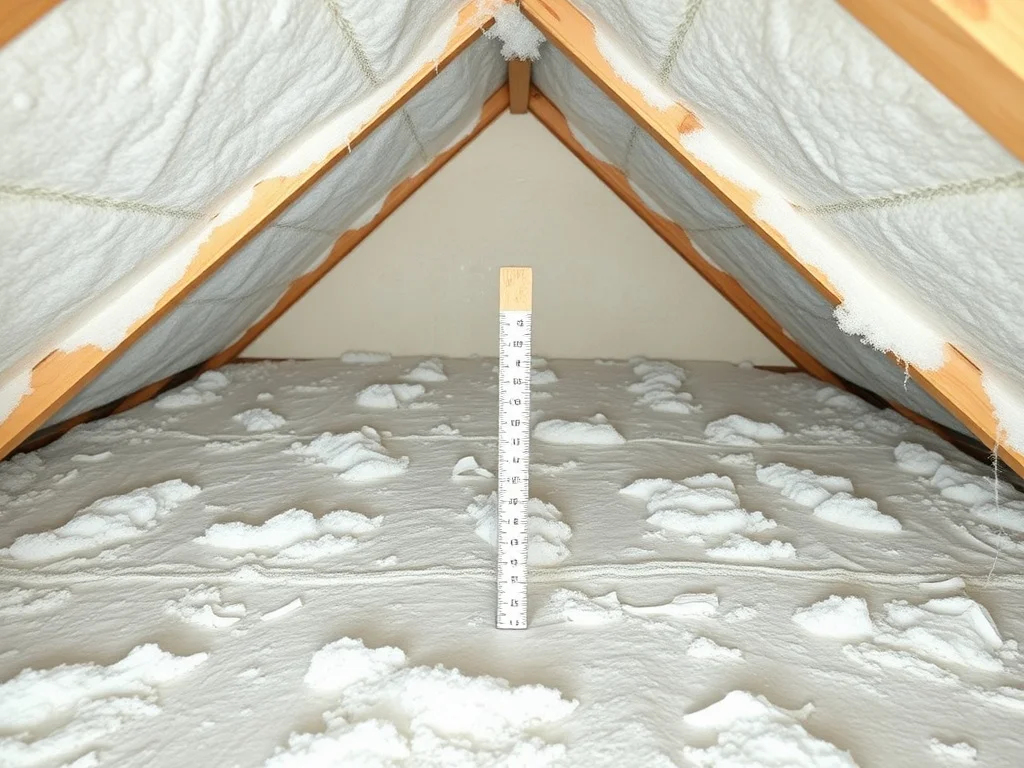
For a standard St. George-area attic floor, blown-in cellulose or fiberglass is generally the most cost-effective way to reach the R-49 recommended target, especially when the existing insulation just needs a top-up rather than full removal. Most straightforward top-up projects, including air sealing, land in the low-to-mid thousands of dollars for a typical single-family attic — the exact number scales with square footage and how much depth is needed.
Spray foam: higher cost per square foot, targeted where it earns it
Spray foam costs meaningfully more per square foot than blown-in because it does more — insulating and air-sealing in one step, with closed-cell foam adding moisture-barrier performance as well. Most St. George-area projects use spray foam selectively: rim joists, crawl space walls, vaulted ceilings, and garage ceilings, rather than a whole attic floor, which keeps the project cost-effective while still capturing foam's real advantages where they matter most.
Batt insulation: the budget option for open framing
Batt and roll insulation is the lowest-cost-per-square-foot option, but it only works in open framing — new construction, additions, and outbuildings — not existing closed attics or walls. It's a common, cost-effective choice for garage ceilings during a remodel or for new-construction projects across the growth corridor.
Removal-and-replace: when it costs more, and why it's worth it
If your existing insulation is monsoon-water-damaged, rodent-contaminated, or too degraded to top up, removal-and-replace costs more than a simple top-up because it adds labor for extraction, disposal, and often sanitizing. It's a worthwhile investment when covering the problem over would simply trap it under new material.
How does Cedar City pricing compare?
Cedar City projects often cost somewhat more per square foot than a comparable St. George project, for two reasons: the recommended target R-value is generally higher (building toward the upper end of R-49 or beyond, versus the Zone 3B minimum), and cold-climate detailing — vapor-barrier placement, snow-load-aware ventilation — adds some labor that a desert-corridor project doesn't require.
What actually affects your specific quote
These are illustrative ranges, not a quote for your home. The fastest way to a real number is a free assessment — we measure your actual attic, confirm your target R-value, and check whether current Rocky Mountain Power wattsmart rebate funding applies before we write anything down. Call 844-967-5247 to get started.
Frequently asked questions
It depends on square footage, current condition, target R-value, and material. Blown-in top-ups are generally the most cost-effective way to reach the R-49 recommended target; removal-and-replace projects cost more due to added labor. We provide a clear, itemized quote after inspecting your specific attic.
Per square foot, yes — spray foam costs more because it insulates and air-seals in one step. Most cost-effective projects use spray foam selectively (rim joists, crawl spaces, vaulted ceilings) and blown-in across the main attic floor.
Cedar City's recommended attic target generally runs higher than the St. George corridor's Zone 3B minimum, and cold-climate detailing like vapor-barrier placement adds some labor a desert-corridor project doesn't need.
Ready for a free quote?
Tell us about your property and we'll build a clear quote — current rebates included.